
Nearly thirty years ago, we created our first CrimeRisk model consisting of the seven ‘major’ crimes tracked nationwide by the FBI. Over the years, we have implemented many changes based on better and additional source data and improved modeling techniques. Despite these methodology changes, the categories of crimes which we track have not changed.
The conversion of FBI systems from the SRS (summary reporting system) to an expanded and improved NIBRS (national incident based reporting system) has been painfully slow. NIBRS promised a greatly expanded crime classification, but only recently have enough jurisdictions updated to the new system to result in consistent data for these crimes.
The 2026B release of CrimeRisk, coming in November, reflects the first of likely several enhancements to the database over the next few years. It combines the NIBRS data with millions of individual incident reports with varying degrees of locational specificity, resulting in a significantly expanded set of crimes that we track.
Among the more important additions are shoplifting (as a subset of larceny) and vandalism. Both seemingly minor offenses have significant costs – estimates of annual shoplifting losses to retailers – passed on to consumers – exceed $70 billion per year, and according to a recent senate report cost households about $500 each year in higher prices.
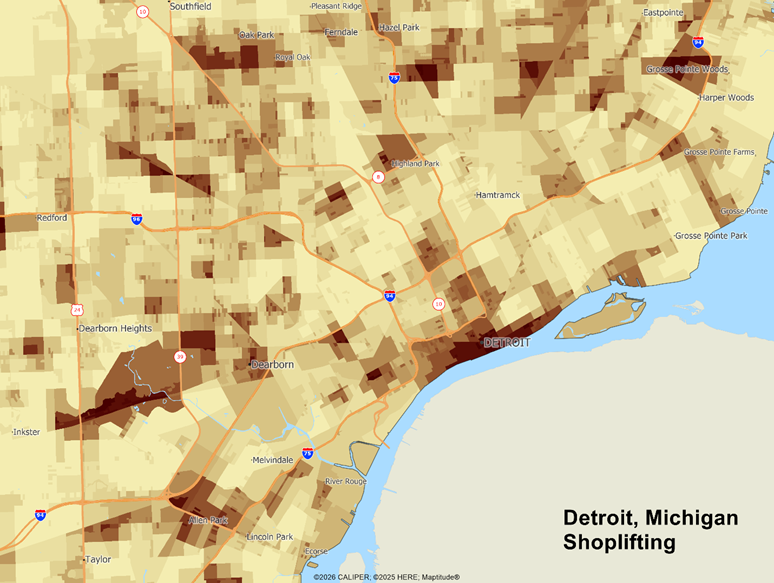
To maintain historical comparability, a third crime group has been added – social disorder. The updated classification is below, with new categories indicated by (*):
- Total Major Crime
- Crimes against persons
- Murder
- Rape / Sexual Assault
- Robbery
- Assault
- Crimes against property
- Burglary
- Larceny
- Shoplifting (*)
- Theft from vehicle (*)
- Other Larceny (*)
- Motor vehicle theft (*)
- Crimes against persons
- Social Disorder (*)
- Simple assault (*)
- Intimidation (*)
- Vandalism (*)
- Weapons violations (*)
- Drugs and alcohol (*)
- Disorderly conduct (*)
- Trespassing (*)
For selected summary indexes, we are also adding time of day and day of week coverage. Some crimes are much more likely occur on a Friday night than a Tuesday morning, and for many users, the distinction is of vital importance. The three summary indexes (total major crime, personal crime, and property crime) are now available for:
- Weekday day (6:00 am to 6:00 pm, Monday through Friday)
- Weekday night (6:00 pm to 6:00 am, Sunday through Thursday)
- Weekend day (6:00 am to 6:00 pm, Saturday and Sunday)
- Weekend night (6:00 pm to 6:00 am, Friday and Saturday)
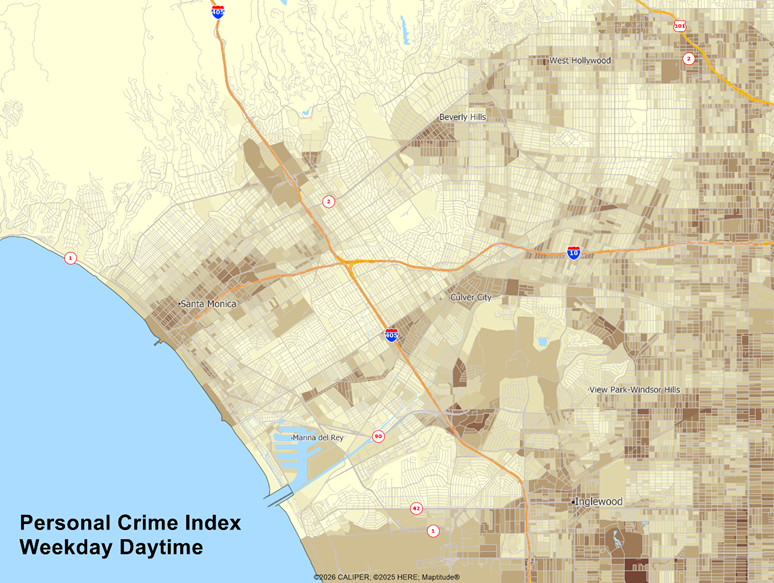
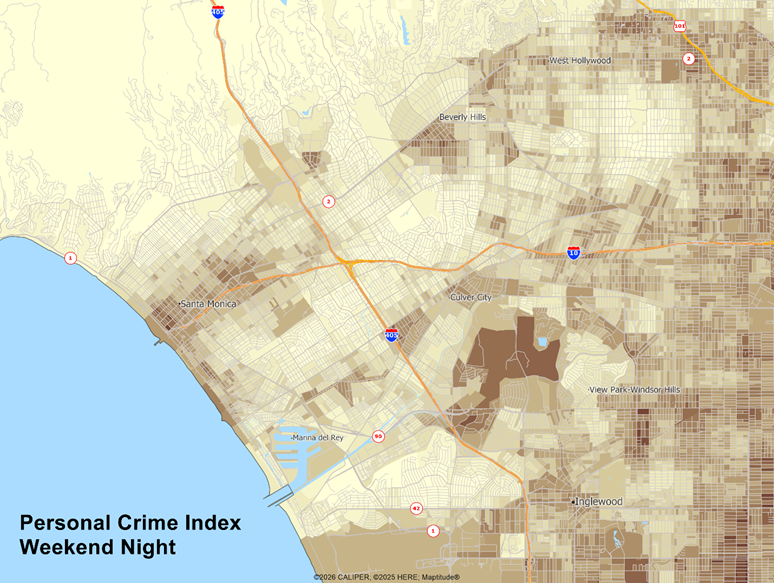
The maps below show the personal crime risk in the westside of Los Angeles – the first weekday daytime and the second, weekend nights. Weekend night crime tends to spike higher in areas with nightlife (restaurant and bar districts, large venues) and in large urban parks.
Over the coming years, as the volume of NIBRS data improves, we anticipate adding both additional crimes and more detail regarding day of week and time of day.