
The Free and Sovereign State of Yucatan was one of the founding states of the first Mexican state which later became an independent republic before rejoining in 1848. Initially including the now separate states of Campeche and Quintana Roo, the state lies at the heart of the Mayan empire.
The peninsula is a relatively flat and low lying limestone plain with few rivers and lakes, and the word Maya is a derivative of the native language word meaning flat – the people of the flatlands. Interestingly enough, the name Yucatan is thought to be a misunderstanding of the Mayan response to the question “what do you call this place?”. The Mayan phrase for “I don’t understand you” could easily be the source of the word Yucatan.
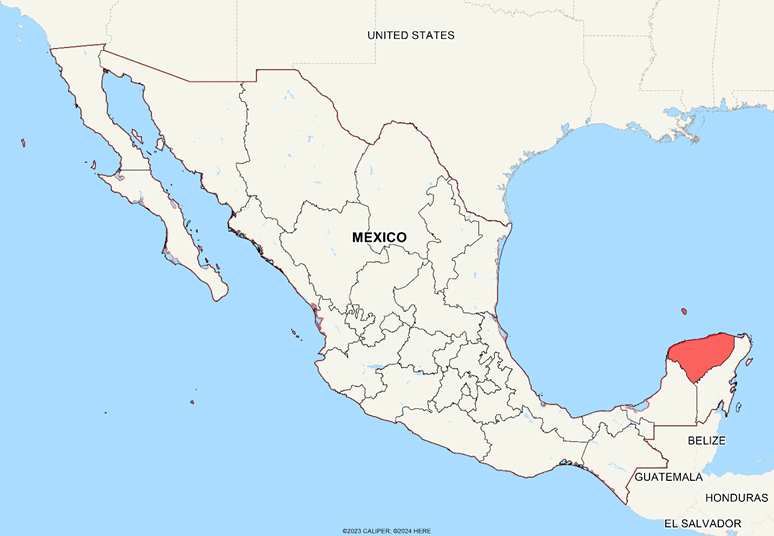
Over 40% of the state’s 2.4 million residents are of full or mixed indigenous descent, and nearly 25% speak both Spanish and a Mayan dialect. The mixture of Mayan and Spanish cultures is unique and persists in part because the area is isolated from the more densely populated areas of central Mexico.
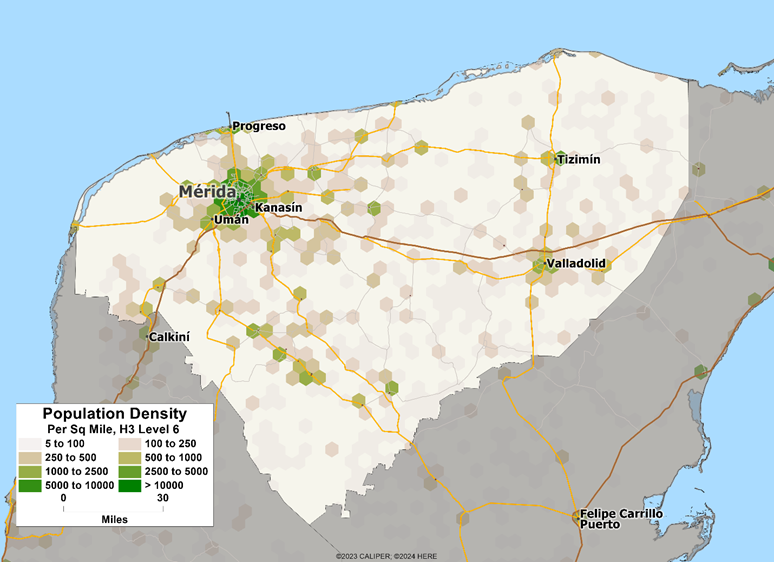
The population is highly concentrated in the metropolitan area of Merida, ranked 11th for size in Mexico. Founded in 1542 on (and with) the ruins of the Mayan city of Ichkanzihoo, it is often called La Cuidad Blanca because of the reliance on limestone in colonial buildings. Merida is a diversified and affluent city which has consistently ranked among the safest large cities in Noth America. It is a business friendly city that has attracted considerable investment in recent years.
A distinction must be made between Merida and the surrounding plain. While Merida is affluent and educated, income and literacy levels in the rural areas of the state are low as the rural Mayan population remains isolated and engaged in largely subsistence farming.
Among the most significant investments is the Tren Maya, a passenger train route from Chiapas through Merida to Cancun, with an extension planned to complete a loop via Tulum and Chetumal. The train ties together many of the rich historical ruins of the Mayan era, with Merida at the center. While growth in the Cancun area has outpaced Merida, it remains the heart of Mayan Mexico. Tourism continues to dominate the economy, as the state is far from the large markets of the United States and has not developed much manufacturing.