
Americans have long been known for carrying around a few extra pounds. When defined as a BMI over 30, the adult obesity rate has more than tripled over the past decades – from about 13% in the 1960’s to a peak of nearly 40% post-COVID. Since their peak in 2022, rates have declined significantly down to 37% in 2025 (Gallup News, October 28, 2025, “Obesity Rate Declining in U.S.”).
Two items recently caught our attention.
The first was an article that analyzed apparel returns from online sales by reason. The “doesn’t fit, too large” reason has been rapidly increasing over the past few years, hitting a high of 14.6% of all returns. GLP-1 related weight loss is one of the culprits, since people can drop a size a month at peak weight loss (Wall Street Journal, https://www.wsj.com/business/retail/americans-on-glp-1s-are-overwhelming-retailers-with-their-nonstop-returns-9c512caf?mod=e2fb).
The second item was from our long term data partner MRI-Simmons, who tied together decreasing alcohol consumption, increasing cannabis use, and rapidly increasing GLP-1 prescription usage. They estimate that over 20 million adults are using GLP-1 medications, up 25% from the previous year (MRI-Simmons 2026). Eight percent of their panel reported taking medications for weight loss, and 13% had a family member doing so. What’s interesting is that adults taking GLP-1 medications are 12% more likely than average to drink low or zero alcohol beer. At the same time, cannabis use continues to rise dramatically, as most users consider alcohol to be a less healthy choice.
Obesity rates have a strong regional pattern – with higher rates in the south and Midwest, and lower rates in California, Colorado, and parts of New England. AGS, as part of its health data series, includes estimates of adult obesity for standard geographic areas as small as the block group.
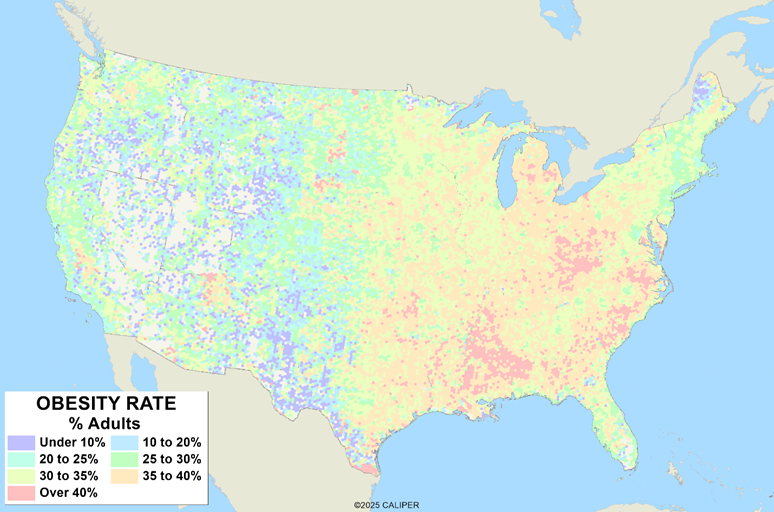
The MRI-Simmons survey, coded to the block level via our Panorama geodemographic segmentation system, provides a wide range of data on health and prescription use. The percentage of adults who used Ozempic, estimated from the MRI-Simmons survey, shows a similar spatial pattern. Several different prescription drugs are included in the 2026A release, including Rybelsus, Ozempic, Victoza, and Trulicity.
While statistics at the segment level have much of the actual variance removed, there is a clear relationship between Ozempic use and obesity:
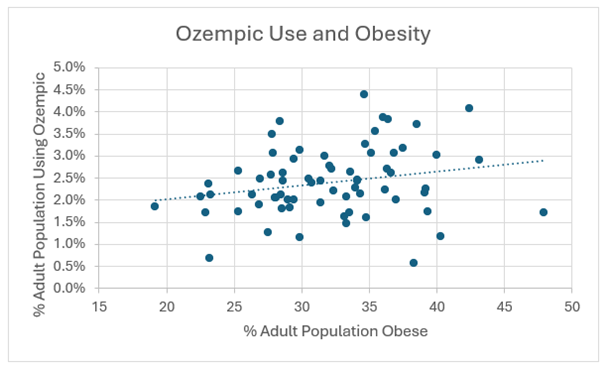
Complicating matters here are that higher income people tend to live in areas with lower obesity but are more likely to be able to afford these medications, and that usage is increasing amongst those who are not obese, but merely want to do a quick ‘tune-up’.
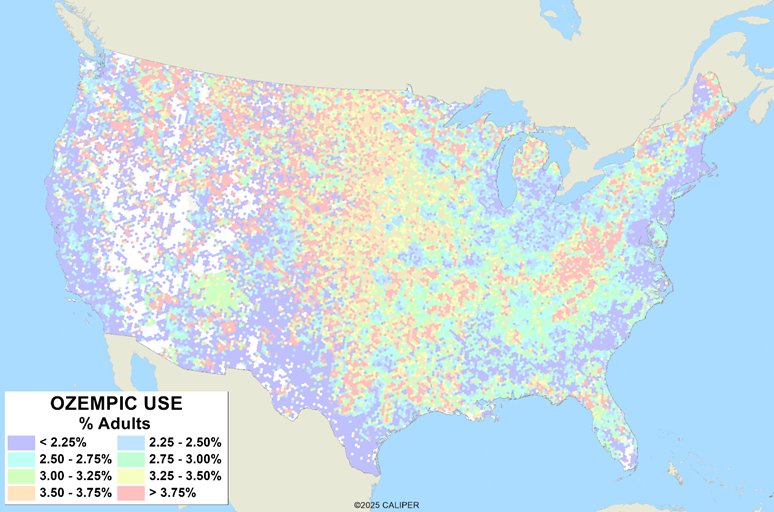
The MRI-Simmons data includes a very rich set of over twelve thousand attributes covering everything from automobiles to vacation travel and everything in between. By using Panorama segments, we can translate the data to provide estimates for areas as small as census blocks.