
Separatist movements in Canada date to the period immediately following the passage of the British North America Act in 1867 which created the confederation, as the Anti-Confederation Party of Nova Scotia elected members to the national House of Commons and had an overwhelming majority in the provincial legislature.
Until the 1960’s, there were no serious secession movements, when Quebec’s ‘Quiet Revolution’ brought widespread change to the province that led to several referendums on the sovereignty of Quebec, the last of which failed by the smallest of margins.
In recent years, however, a growing movement in Alberta has gained enough support to be on a ballot this fall, albeit in a rather weak fashion. The question does not ask whether Alberta should separate from Canada but would merely open the door to a subsequent referendum specifically asking that question. Support for a separate Alberta is likely in the 25% range with another 10% undecided, based on polls taken in May and June.
The main grievances are:
- Political: Alberta has less than 10% of the House of Commons seats while having 12% of the population, and only 6 of the 105 seats in the largely ceremonial senate.
- Cultural: A sense of distinctiveness of Alberta’s cultural and political identity, as the province remains a bastion of conservatism
- Economic: There is a net outflow of taxation to Ottawa through the Canadian equalization payments which generates substantial resentment, especially given the growing political chasm between the policies of Edmonton and Ottawa. Median household income in Alberta is the highest of the provinces, exceeded only by income levels in the northern territories, 16% above the national average.
Alberta is, for lack of a better way to put it, Canada’s Texas. Rich in oil reserves and ranching, Albertans are more likely to feel at home in Montana and Wyoming than they would Ontario or Quebec. It also has a growing tech industry employing about 60,000 people.
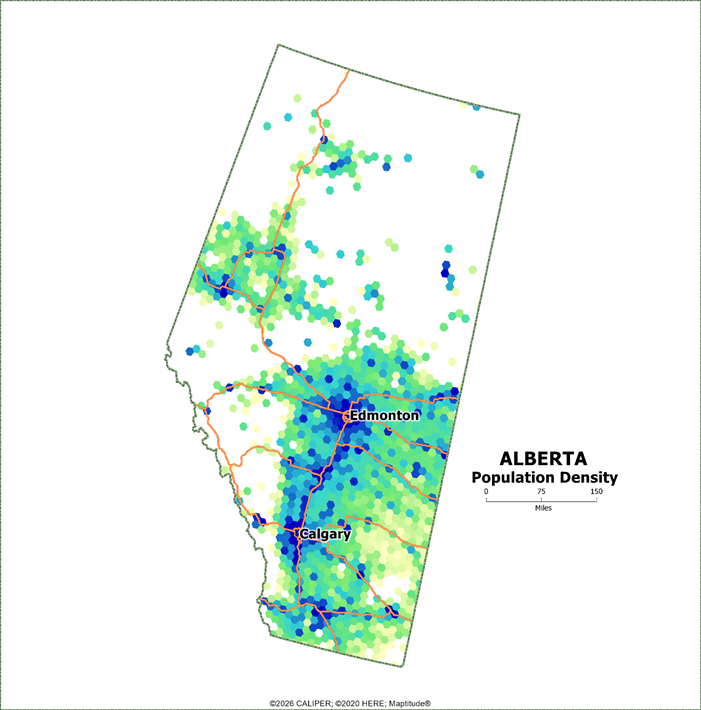
Alberta has grown considerably in recent decades, with a population of nearly five million, with well over half living in Calgary and Edmonton:
| Metropolitan Area | Population |
| Calgary | 1,805,969 |
| Edmonton | 1,658,556 |
| Lethbridge | 141,665 |
| Red Deer | 116,669 |
| Wood Buffalo | 83,860 |
| Medicine Hat | 83,803 |
| Grande Prairie | 71,334 |
While it does not look like the referendum will pass, it should be a wake-up call to the federal government. Over the last decade, many of the environmental policies have been detrimental to the oil and ranching core of the province. The Carney administration has already responded by reviving two major pipeline projects which the previous administration had stymied. This won’t overcome the feeling in Alberta that their votes simply don’t matter, as most election outcomes are determined well before the polls close in Alberta.