
Nearly eighteen months ago, two wind driven fires ravaged two separate neighborhoods in Los Angeles – Altadena and the Pacific Palisades. Entire neighborhoods were burned to the ground, 31 people died and at least 13,000 homes were destroyed.
The two areas could not be more different.
The Palisades fire impacted the generally affluent coastal area from Santa Monica to Malibu – when even the seventy five year old mobile home park at Temescal Canyon would run you into the millions. While homes were destroyed all along the coast, most of the damage was in the Pacific Palisades neighborhood within the Los Angeles city limits. The drive along PCH is, or at least was, classic LA. Miles of beaches, ocean-front houses hanging over the bluffs and built on concrete pillars, and homes built into the hillsides with incredible views.
The Eaton fire primarily affected Altadena, tucked away to the northwest of better known Pasadena and not generally on the tourist maps. Altadena resisted annexation over the years by Pasadena and remains an unincorporated part of Los Angeles County. Altadena was a very diverse middle income area of the city.
At the time of the fires, the mayor of Los Angeles and the governor of the state both pledged that the infamous red tape would be removed so that redevelopment could occur as soon as possible. Eighteen months later, the Palisades burn zone shows very little indication of redevelopment aside from the coast highway which is still limited to 25 miles per hour because of uncompleted repairs. The AGS hotblocks index shows very little activity at present:
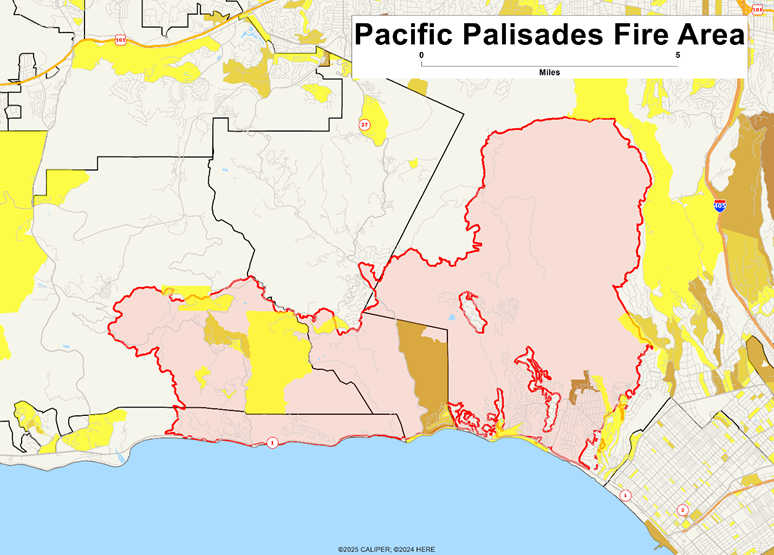
The main areas with construction are in the unincorporated parts of Los Angeles County to the west of the main destruction zone. The Palisades area has detectable activity only in a few blocks. Almost no building permits have been issued.
On the other side of the city, the activity map looks radically different:
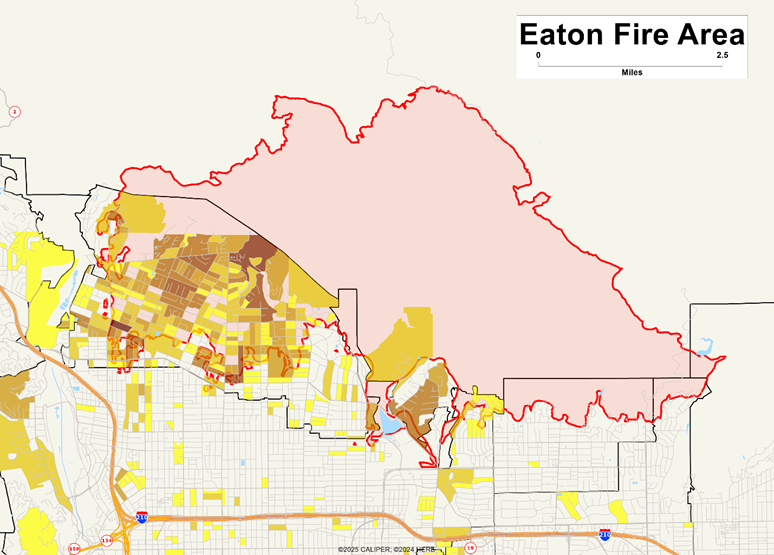
The dark shaded blocks are among the most developmentally active nationwide, and almost every block has rebuilding activity. Thousands of building permits have been issued.
This at first seems like a paradox – the affluent burn areas got more media attention, and residents are much more likely to have the resources to rebuild.
So why are there differences? The reasons are many, but key among these are:
- The city of Los Angeles, despite promises from the mayor, remains mired in byzantine red tape, especially compared to the county. Los Angeles County actually removed many of the barriers to permitting and have been actively assisting both displaced residents who want to return and new owners wishing to build and sell.
- The demographics of the coastal areas were such that many of the older residents assumed that between the city and the inevitable fights with the coastal commission, it would be years before they could rebuild. In other words, many decided that they would not live long enough to see their houses rebuilt. Affluent or not, many simply decided to sell their properties and move on.
- Many of those properties have been purchased by corporate interests who have the resources to wait for the notoriously anti-development California Coastal Commission. Unlike in Altadena, it is unlikely that rebuilding a beach house exactly as it was pre-fire would be approved in a timely manner, if at all. We suspect that the corporate developers will offer to fund preservation of coastal lands further north along the coast in exchange for being permitted to build condo apartments and townhouses. Ultimately, what is rebuilt will not have the same flavor as the classic beach town it once was.