
Nayarit, named after the indigenous peoples who inhabited this central Pacific coast state, is one of the smallest in terms of both area and population. Given its small size, it boasts a remarkable range of diverse areas from its tourism oriented coastal beaches to its sparsely populated and rugged interior mountains.
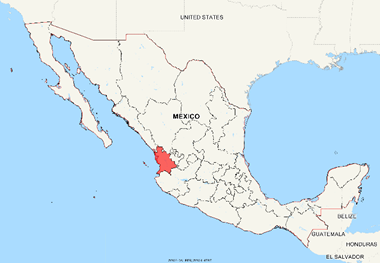
With just over 1.25 million people, it is one of the smallest states of the union. The coastal plain is one of Mexico’s premiere agricultural zones, and gold and silver mining has long been a staple of the economy of the Sierra Madre range.
Nayarit was admitted to the federation in 1917. Originally part of Jalisco to the south, it became the federal Military District of Tepic in 1867 because of widespread rebellion and political unrest, and with stability restored became the Federal Territory of Tepic in 1884. It was recognized as a state under the 1917 constitution.
There are two main areas of development in the state. The capital city of Tepic remains dominant with nearly one third of the state population, with a second concentration in Bahia de Banderas. The Bahia district, increasingly known as the Riviera Nayarit, is one of the fastest growing tourist areas in the country, with numerous luxury resorts now filling the coastline north of Jalisco’s Puerto Vallarta.
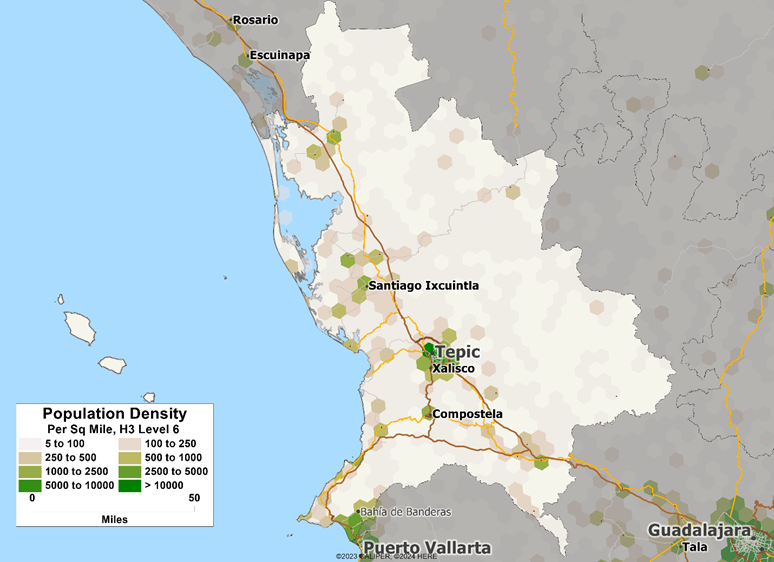
The southern coastal area includes a number of quaint seaside towns that primarily have catered to domestic tourists from Guadalajara and Mexico City, such as Sayulita, where our very own Oscar Zaragoza has called home since the early days of the pandemic. Oscar wholeheartedly agrees with Conde Nast Traveler magazine, which ranks the town in its 50 most beautiful towns in the world.
Incomes vary considerably across the state – well above average in the Riviera, but very low in the largely indigenous population in the mountainous interior, where illiteracy and inadequate housing remain serious impediments to development.
Much of the economy is seasonal, and there is little economic development aside from mining, agriculture, and tourism. Much of this is related to the historic isolation of the central Pacific coast given the barrier of the Sierra Madre range that separates the area from the major metropolitan areas to the east.
Two primary highways provide access to the state – highways 15 and 200. Only in the last 20 years has the key link from Tepic to Guadalajara been upgraded to freeway standards – enabling the boom in domestic tourism. The nearby Puerto Vallarta airport offers numerous direct flights to many US and Canadian cities, ensuring a steady supply of tourists seeking winter sunshine.