
It’s Winter Olympics season, and whether you are glued to your television every night or just catching medal alerts on your phone, it is hard to ignore the drama unfolding on the slopes of Cortina d’Ampezzo. The Italian Alps have already proven challenging, with steep descents, variable snow, and technical terrain testing even the most experienced athletes. As viewers watch athletes navigate these demanding courses, a geographical question emerges: does growing up and training in similar terrain improve an athlete’s chances of standing on the podium?
To explore this, we analyzed elevation, terrain, slope, and snowfall across the United States and compared those patterns with the hometowns of American skiers and snowboarders competing in the 2026 Winter Olympics. While elite athletes now train around the world, their early development is still shaped by local geography. The landscapes they grow up skiing and riding on often leave a lasting imprint on their skills.
Our first step was examining elevation. Areas above 4,000 feet tend to have colder temperatures and longer winters, making them logical candidates for winter sports development. This threshold highlights much of the Rocky Mountains, Sierra Nevada, and Wasatch Range. However, elevation alone does not tell the full story. Many important East Coast ski regions, particularly in Vermont and northern New England, sit well below this mark yet continue to produce elite athletes. These areas may lack towering peaks, but they compensate with steep slopes, dense trail networks, and strong training programs.
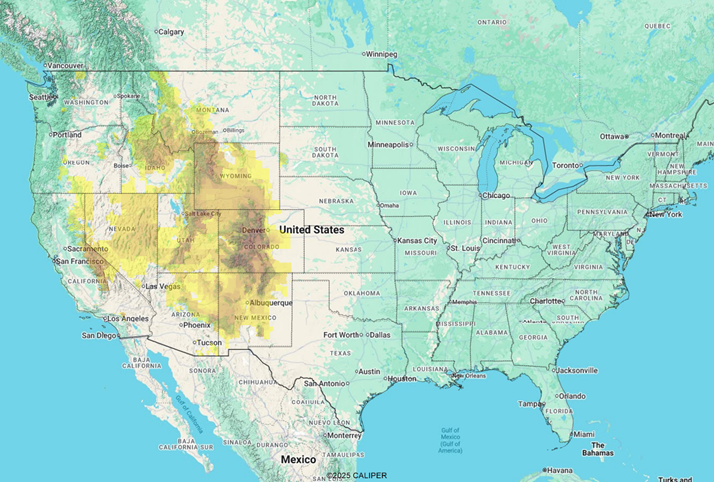
To better isolate true training environments, we turned to terrain ruggedness and average slope. These measures do a better job of capturing the kinds of conditions athletes face on Olympic courses. Steeper slopes and more varied terrain tend to produce technically skilled skiers and riders who are comfortable at high speeds and in challenging snow conditions. When mapped, these variables reveal several consistent clusters across the country.
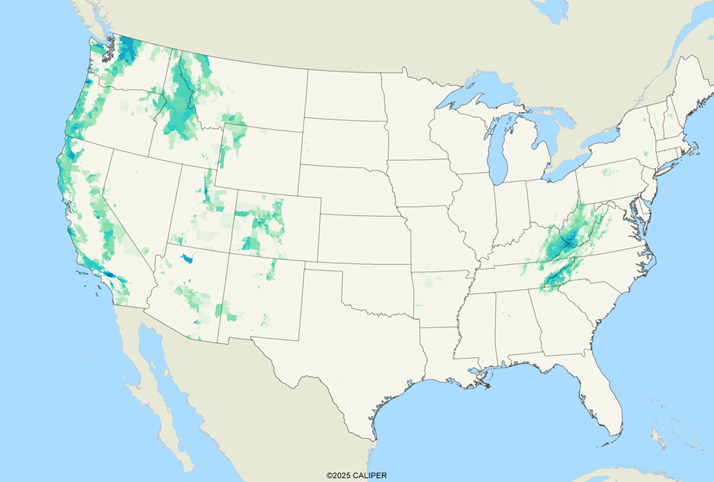
Colorado’s central and eastern Rockies stand out immediately. This region includes many of the nation’s best-known resorts and offers a rare combination of high elevation, long vertical drops, and reliable winter conditions. Utah’s Wasatch Range, stretching from central Utah through Park City and north of Salt Lake City, forms another clear hot spot. Its compact, steep terrain and exceptional snowfall have made it a powerhouse for both alpine and freestyle disciplines. In California, the Sierra Nevada corridor from Mammoth Mountain to Lake Tahoe emerges as a major training zone, providing big-mountain terrain and high elevations, even if snowfall varies more from year to year.
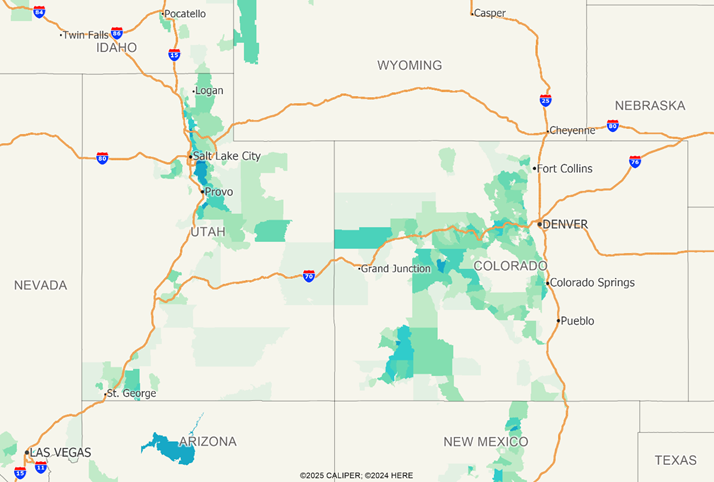
Interestingly, southern California’s San Gabriel Mountains also appear in the terrain analysis, with impressive slopes and rugged features just north of Los Angeles. However, warmer temperatures and inconsistent snow limit their usefulness for sustained elite training. Parts of Washington and Idaho show strong potential as well, but their relative remoteness can make it harder to support large, year-round development pipelines.
When snowfall is added to the analysis, the picture becomes even clearer. Reliable snow is essential for consistent training, competition, and skill progression. Areas receiving at least two feet of annual snowfall overlap heavily with the Rockies, Wasatch, Sierra Nevada, and northern New England. These regions offer not only challenging terrain but also the dependable winters needed to support youth programs and elite clubs.
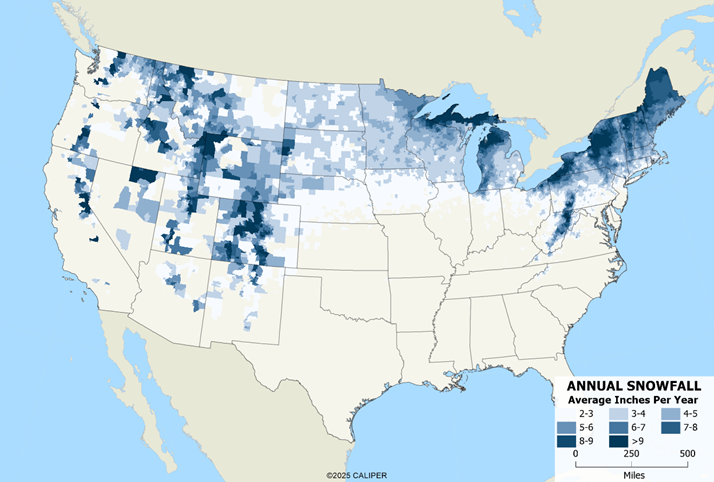
The hometowns of U.S. skiers and snowboarders competing in the 2026 Games align closely with these patterns. Colorado communities such as Edwards, Vail, Steamboat Springs, and Summit County continue to dominate alpine and freestyle events. Utah’s Park City and surrounding areas remain central to snowboarding and freeskiing development. California’s Tahoe and Mammoth regions produce a steady stream of freestyle and snowboard talent. Vermont, despite its lower elevations, remains a cornerstone of American alpine skiing, supported by decades of institutional knowledge and strong youth systems.
These patterns suggest that Olympic success is rarely accidental. It emerges from a combination of physical geography, climate, infrastructure, and accessibility. The most productive regions sit where steep terrain, reliable snow, established training programs, and nearby population centers intersect. Colorado and Utah, in particular, mirror many of the conditions found in the Italian Alps around Cortina: moderate-to-high elevation, technical alpine faces, consistent snowpack, and dense networks of resorts and clubs.
Modern athletes benefit from advanced equipment, data analysis, and international training opportunities. Yet geography still provides the foundation. Growing up near Olympic-caliber terrain means more time on snow, earlier specialization, stronger competition networks, and easier access to elite coaching. No amount of technology can fully replace thousands of childhood hours spent navigating steep, icy, unpredictable slopes.
As the competition unfolds in Cortina, it becomes clear that the mountains shaping Olympic champions are not random. They follow predictable geographic patterns that emerge when elevation, terrain, and climate are examined together. From the Rockies to the Wasatch to the Sierra Nevada and the Green Mountains, America’s winter athletes are, in many ways, products of their environments. In the pursuit of gold, where you grow up still matters.