
What’s a turkey to do this time of year? Most of the year, humans are content to let turkeys be big, funny-looking birds. Then November rolls around, and suddenly everyone has an opinion about how to cook one. Over the next week, Thanksgiving hosts will be buying turkeys to roast, smoke or deep-fry. Unless you’ve got a presidential pardon lined up, it’s a dangerous time to be part of the flock. So where’s a turkey safest? We turned to the data.
We looked at four measures: the ratio of vegans and vegetarians to hunters, average spending on poultry, the availability of suitable habitat, and the locations of poultry farms and processing plants. Each tells us something on its own. Put them together, and you get a national map of where a turkey has the best shot at making it through Thanksgiving. So to speak.
Naturally, we started with hunters. A turkey should look for a place where vegans and vegetarians outnumber hunters. The fewer people willing to skip the grocery store and go find their own Thanksgiving centerpiece, the better.
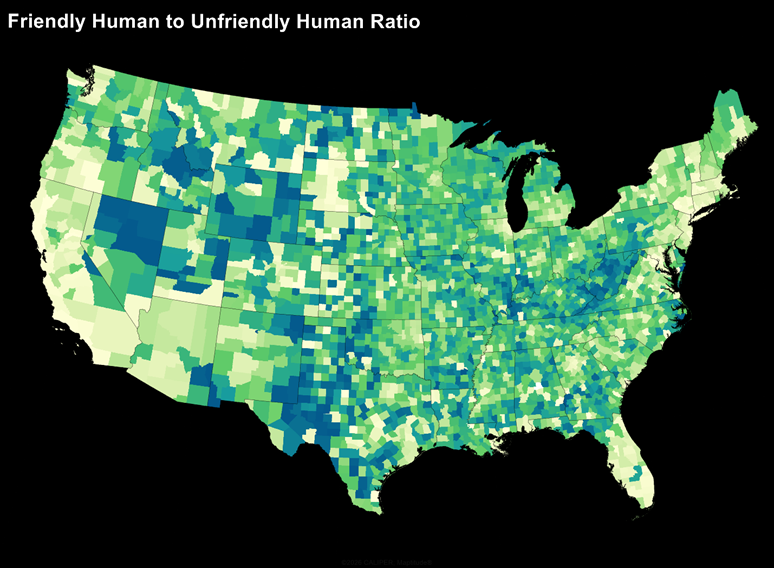
Large urban areas tend to have plenty of vegans and vegetarians. A downtown address may come with more competition for food, but for a couple of weeks, it might be worth putting up with the neighbors. Appalachia, on the other hand, is best avoided. The map suggests bad things happen to turkeys there.
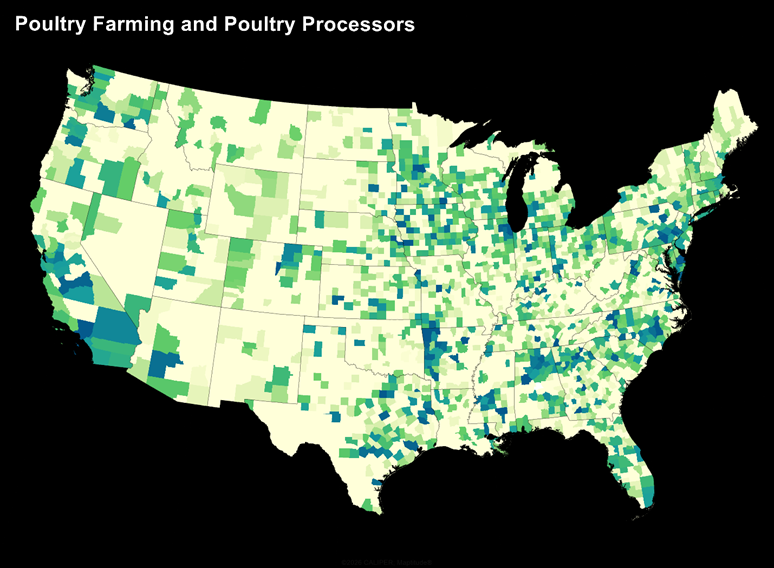
Next, we looked at poultry farms and processing plants, for obvious reasons. If you’re trying to keep a low profile, the dark blue areas on the map are a poor place to start. And if you’re counting on those wings to get you out of trouble, you may want to have a backup plan. As for the Oklahoma–Arkansas border, keep walking.
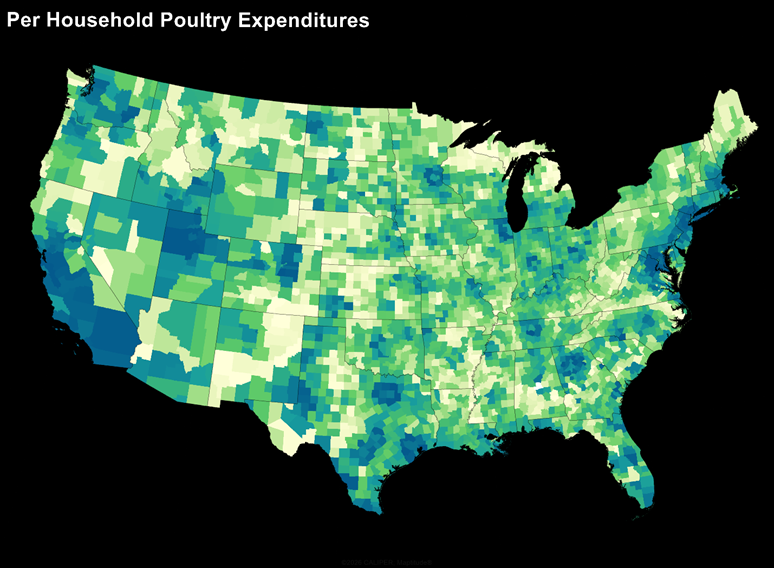
Then there’s poultry spending. Avoid places where households spend the most on birds, even if much of that money goes toward chicken. That includes some big, affluent cities where a locally raised turkey earns its own introduction at the Thanksgiving table.
Curiously, some of the places that spend the most on poultry also have plenty of vegans and vegetarians relative to hunters. A turkey could be forgiven for wondering who’s keeping the Chick-fil-A drive-thru so busy.
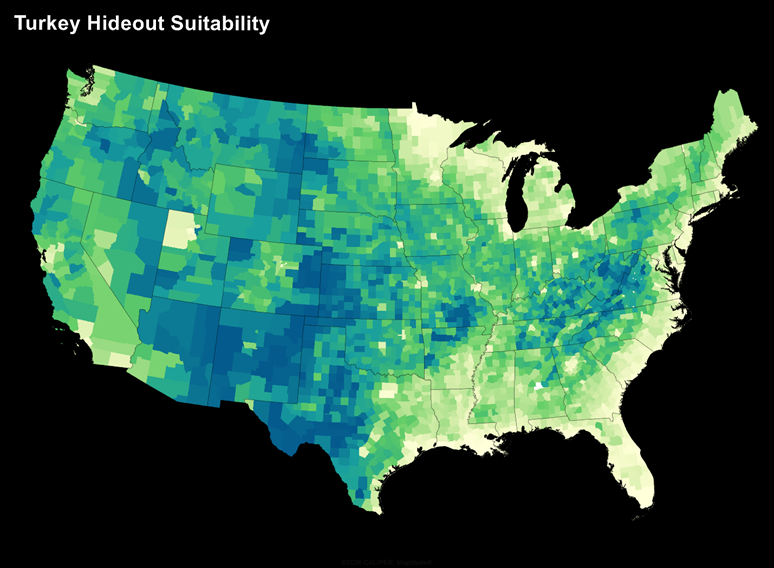
Of course, a turkey also needs somewhere to hide. Wooded areas, expansive croplands and rangelands all offer places to lay low until the leftovers are gone. If you decide to blend in with a flock of quail, remember that you’re the size of several quail.
So, where should a turkey go?
When we combine all four measures, a few places stand out for turkeys hoping to make it through November.
- Montana
- The drier parts of the western Plains and the deserts of the Southwest
- The Ozarks, with a wide detour around the Oklahoma–Arkansas border
- Northern California and Oregon
Once spring and summer roll around, the model points to major urban areas, the Gulf Coast and Florida’s coasts, areas just south of the Mason–Dixon line, and the Upper Midwest. Florida makes a fine destination for a snowbird, assuming you can find a room under the name Quail.
It’s a wild world out there, but even turkeys deserve a fighting chance.
Thanksgiving Travel Expected to Dip Slightly Compared to Last Year – AAA Newsroom