
At the time of American revolution, the colonies that eventually became Canada had a population of about 140,000 people – with nearly 2/3 in Quebec. The first major wave of immigration were the thousands of United Empire Loyalists who fled northward, and Canada has continued to be a country which accepts refugees – whether economic, political, or religious. Canada has also at times promoted immigration, such as the settling of the western plains where large tracts of land attracted large numbers of European farmers.
Nearly 25% of Canadian residents are foreign born, a percentage which has steadily increased from 15% in 1951, despite persistently high levels of out-migration primarily to the United States. In recent years, Canada has consistently admitted about four hundred thousand immigrants a year, and the population has grown substantially in just the last five years from 37 to 41 million people. Immigration from Asia – specifically China and India – dominates the recent patterns.
Most of the new residents have migrated to the largest cities, especially the “Greater Toronto Area”, Vancouver, Calgary, and Edmonton. Immigrants often attempt to maximize comfort in adapting to a new country by clustering in parts of the country and even specific neighborhoods. In general, the immigrant population increases with population, as shown on the chart below (using Log10 to normalize the size):
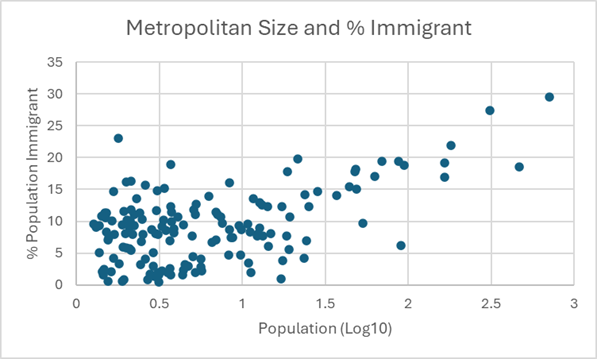
It is the deviations from this pattern that are of most interest. By mapping the residuals from a regression line (r2=0.68), we quickly can identify two key determinants —
- Language: immigration to Quebec is much lower than expected given the size of the cities, except for immigration from areas where French is commonly spoken
- Economic: immigration levels in the Atlantic provinces are much lower than in the west, largely because of a long-standing lack of economic opportunities
There are several small cities which have an unexpectedly high percent of immigrants, at least in part because of refugee settlement policies.
- Several smaller centers in Alberta – Brooks, High River, Canmore and Wood Buffalo – have much higher immigrant populations that would be expected given their small size. This in part is due to the “Rural Renewal Stream” program which streamlines immigration procedures to fill vacant employment positions. Fully 20% of the population of Brooks are immigrants, with most being refugees from Eritrea, Ethiopia, Somalia, and Sudan. Each of these small cities has a particular ethnic group which dominates their immigrant population.
- In the larger urban areas, the ethnic mix of immigrants tends to be much broader. However, many of these groups have chosen specific areas of the city where they are clustered.
Given that Toronto has immigrants from all corners of the world, we took a look at the distribution of individual groups – many seem to cluster in certain parts of the city, others along corridors:
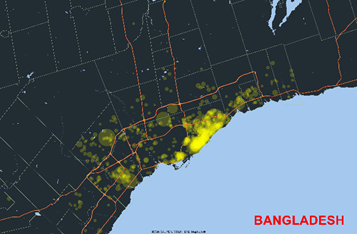
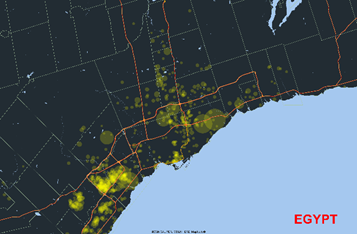
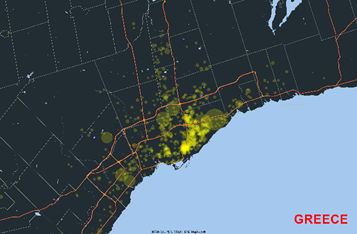
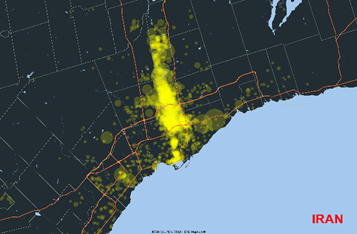
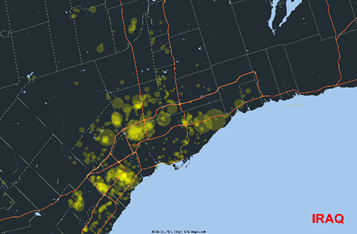
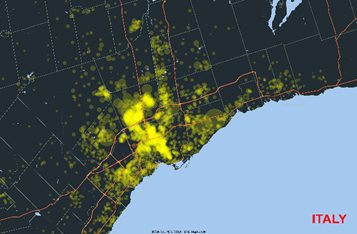
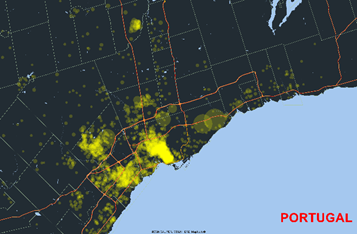
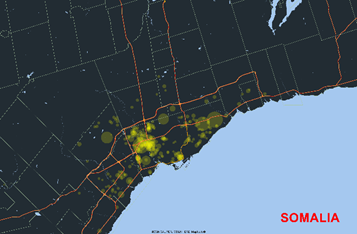
For marketing and location analysis, the sharp dividing lines between neighborhoods of different ethnic origins should be considered as ethnicity strongly affects patterns of consumer expenditure. All too often, ancestry and religion are not even reviewed, let alone used, in location decisions. Increasingly in Canada, that is at your peril